



How to Find Your Way Around the Bible So You Can Lead Your Children with Confidence
If you want to lead your children to understand God’s Word, you have to grow comfortable opening it yourself. That truth can feel intimidating.
Many parents deeply believe the Bible is true. They want their kids to love Scripture. They want family devotionals to feel natural and meaningful. But underneath that desire is a quiet insecurity:
What if I don’t even know how to find things in the Bible?
I remember sitting in church not long after becoming a Christian. The pastor stepped up to the pulpit and said, “Open your Bibles to Habakkuk.”
Habakkuk.
My first thought was, The book of Haba-what? I began flipping frantically through the pages, trying to look calm. Everyone around me seemed to know exactly where they were going. Pages turned with confidence. Meanwhile, I was scanning headings, pretending I wasn’t completely lost.
By the time I found it, the pastor had already read the passage, explained it, and moved on. I felt awkward and embarrassed, like I was the only one in the room who didn’t know how to navigate the Bible.
If you’ve ever felt that way, especially as a parent, you’re not alone. Here’s the good news: navigating the Bible isn’t a special gift reserved for pastors and scholars. It’s a skill. And skills can be learned.
The Bible Is Not One Book. It’s a Library.
One of the reasons the Bible can feel overwhelming is that we think of it as a single book. It’s not. It’s a collection of 66 books written by about 40 different authors over 1,500 years across three continents. When you hold your Bible, you are holding a small library.
That realization alone changes how you approach it. You are not flipping through one long story written by one person. You are moving through carefully arranged books, each with its own purpose and voice, placed intentionally within a larger story. And like any library, there is an organization to it.
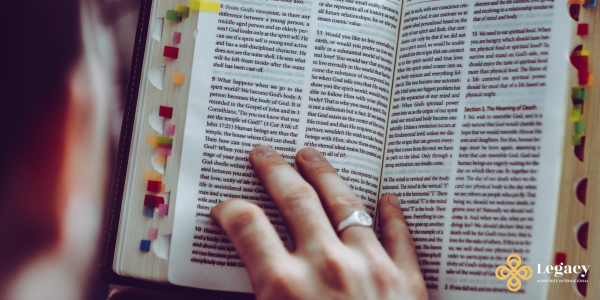
Understanding How the Bible Is Organized
The Bible is divided into two major sections:
The Old Testament and the New Testament.
The Old Testament contains 39 books. The New Testament contains 27. Together, they form the complete 66 books of the Bible.
Within those two sections, the books are grouped by type.
The Old Testament moves from Law to History to Poetry and Wisdom to the Prophets.
The New Testament begins with the Gospels, then History, then Letters, and ends with Prophecy.
You do not need to memorize that today. Just knowing there is structure brings relief. The Bible is not randomly assembled. It is thoughtfully arranged. When you understand that, the pages begin to feel less chaotic and more intentional.
Why Finding a Verse Can Feel Impossible
Imagine your child is struggling. Maybe they feel unseen or unimportant. You remember a verse about being “fearfully and wonderfully made.” You want to show it to them.
But where is it?
If someone only told you, “It’s in Psalms,” that would not be enough. Psalms alone contains 150 chapters. You could spend hours flipping and still not find it.
That’s where chapters and verses come in.
They were added later, not by the original authors, but by scholars who wanted to make Scripture easier to navigate. Chapter divisions were added in the 1200s. Verse numbers followed in the 1400s and 1500s. By 1560, the Geneva Bible included both, creating the system we still use today.
Because of that system, someone can now say, “It’s Psalm 139:13–14,” and you can find it.
Every Bible reference follows the same pattern: Book. Chapter. Verse.
John 3:16 means the book of John, chapter 3, verse 16.
If you see a dash, like John 3:16–18, you read a range.
If you see a comma, you read separate verses.
If you see a semicolon, you move to a different book.
What once felt mysterious becomes practical. And practical builds confidence.
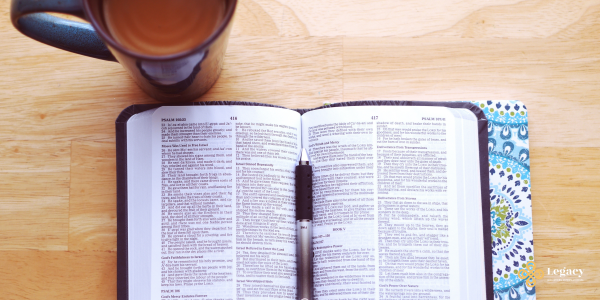
Learning to Navigate a Physical Bible
If you use a printed Bible, give yourself grace. Use the table of contents. That is not cheating. It is wisdom.
Consider adding tabs. Notice where the Old Testament ends and the New Testament begins. Pay attention to how thick the Psalms section is. Observe that the Gospels sit at the beginning of the New Testament.
Those observations create mental landmarks.
Confidence does not grow from speed. It grows from repeated exposure. The more you flip through the pages, the more familiar they become. And familiarity changes everything.
Using a Bible App Without Guilt
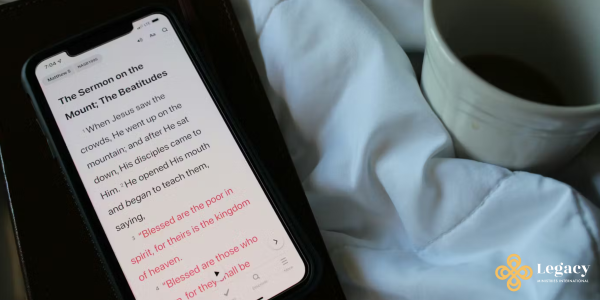
Maybe you prefer a Bible app. That’s not a lesser option. Apps allow you to search instantly by book, chapter, and verse. You can bookmark passages, highlight meaningful lines, and compare translations with a tap.
Using digital tools is not taking a shortcut. It is simply using modern access to an ancient text. The goal is not to prove you can find Habakkuk in under three seconds. The goal is to engage Scripture consistently and confidently so that when your child asks a question, you are not paralyzed by uncertainty.
Why This Matters for Your Family
Here’s the deeper truth.
Your children are not just learning the Bible from what you teach. They are learning it from how you approach it.
If you treat Scripture like foreign territory, they will sense that. If you approach it with growing confidence and curiosity, they will sense that too.
You do not have to know everything. You simply need to know how to find what you need. When your child asks, “Where is that verse?” you can say, “Let’s find it together.” That posture is powerful. Leading your children in God’s Word does not require perfection. It requires willingness.
The Real Goal Is Confidence, Not Speed
That Sunday morning years ago, I felt embarrassed because I thought everyone else had mastered something I hadn’t.
Now I understand something different.
Most people learned by flipping pages slowly. By using the table of contents. By asking questions. By practicing.
Navigating the Bible is not about speed. It is about familiarity. You don’t need to know where every book is today. You simply need to understand how the Bible is structured and how references work.
Take a few minutes today. Open your Bible. Find the Gospel of John. Notice that it sits in the New Testament. Turn to John 3:16. Let your fingers learn the feel of the pages.
When you grow comfortable finding your way around Scripture, you are not just building knowledge. You are building confidence. And that confidence will quietly shape the spiritual leadership in your home for years to come.


Navigating the Bible can be tricky for kids. Do you have any tips on keeping their interest?