Across the country, summer is in full swing. Here in Arizona, the heat is just gearing up at 112, and we know summer will last for another couple of months. If you have ever felt that summer lasts forever, you might live in Arizona. By the end of summer, we are often tired of the scorching heat, humidity, and sweating. I remember well the additional discomfort when I was in the third trimester of pregnancy, and I’ve heard it’s miserable when in the throes of menopause, during which no number of fans or “cooling” pillows and mattresses help us escape the heat and sweat. So, shout out to those women!
Arizona does not get a lot of rain, though there are times when storms come through. For the most part, it’s dry. Then, you add the fires that ravage different parts of the state, consuming the vegetation in their path and destroying any evidence of life. This creates the brown, barren desert that we often see driving through different parts of the state—land that may still be scorched black from where the fires last came through.
To escape the heat, many flock to the mountainous parts of Arizona. On these drives, those from the desert area may notice something that you don’t see often: greenery.
Growth in the Spring, and then there’s Summer!
We often think of Spring as the time for growth and new life. We hear baby birds singing their songs, we watch flowers bloom, and we might even find ourselves saying, “April showers bring May flowers”. In Arizona, many gardeners will be the first to tell you that it’s hard to grow anything in the summer. The scorching sun and 110-degree temperatures will wilt any poorly maintained and supported plant. Summer brings death to those who are not adequately prepared. Thus, the abundant greenery you might see on a trip up north can be mesmerizing for several miles as you point out different plants in different shades of green, some with flowers and some without.

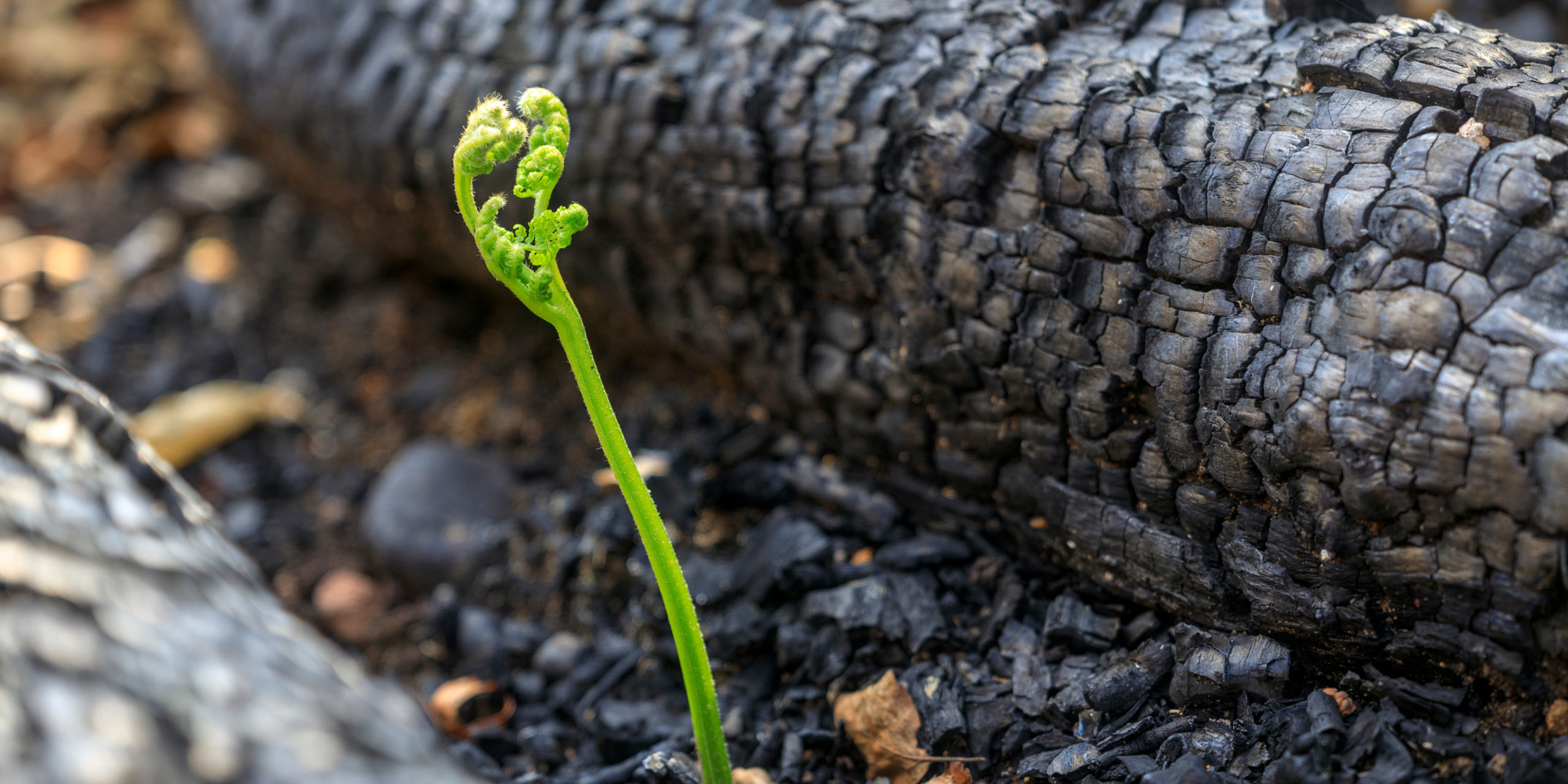
One summer, while driving through these areas, we saw green all around us for the first time in a long time. On both sides of the road, long, bright green blades of grass whipped in the wind, evidence of the storms that had come through over the summer. The land was blooming, growing past the charred remains from previous fires. As we drove through the area, Joel and I found it to be a wonderful picture of life and the lessons God gives us through nature.
The Hidden Impact of Fires
If you still need to research how fires revitalize the land, let’s paint a picture. Fires can be incredibly beneficial to the land in a couple of ways. Fires can clear the dead and dying to make way for new growth.1 Burnt materials can leave nutrients in the soil that allow more growth through increased fertility.2 As Joel and I looked around, it was clear that the fires that had caused so much destruction in the land had left a new, fertile soil. When the July-August monsoons spread across the area, there was the prime opportunity for new growth, for plants to rise, for animals to eat, and for the ecosystem to thrive.
When we see the actual result of fire and the cycle that God created to play out and successfully result in new life, the image of fire in the Bible takes on new meaning and understanding.
Bible Verses About the Impact of Fire
Isaiah 48:10
“Behold, I have refined thee, but not with silver; I have chosen thee in the furnace of affliction.”
1 Peter 1:7
“so that the proof of your faith, being more precious than gold which is perishable, even though tested by fire, may be found to result in praise and glory and honor at the revelation of Jesus Christ;”
Psalm 66:10-12
“For You have tried us, O God;
You have refined us as silver is refined.
You brought us into the net;
You laid an oppressive burden upon our loins.
You made men ride over our heads;
We went through fire and through water,
Yet You brought us out into a place of abundance.”

Zechariah 13:8-9
“It will come about in all the land,”
Declares the Lord,
“That two parts in it will be cut off and perish;
But the third will be left in it.
“And I will bring the third part through the fire,
Refine them as silver is refined,
And test them as gold is tested.
They will call on My name,
And I will answer them;
I will say, ‘They are My people,’
And they will say, ‘The Lord is my God.’”
It’s always a great reminder when we start thinking about where we have been in our lives and how God has worked in us. When we start thinking of the trials we have gone through and how we came out the other side, we notice that God is present with us and will use these moments of hardship, pain, and struggle to bring an abundant new life. The question is, how do we use this as an opportunity to teach our children?
Steps to Maximizing the Fires in Our Life:
When fire hits, it’s easy to withdraw, hide, and run away. There might be times when this is what we have to do for safety and healing. However, we can’t live in isolation and fear long term.
- Identify where your fire is—marriage, kids, work, church, friendships, our schedules.
- Recognize that God can nourish you through it and use it to bring new life.
- Share: Let your fires bring God glory. Tell your story to others and share it; don’t hide it.
- Teach: Use your experience to talk to your kids (or other kids!) about their fires; let them see how you are handling your circumstances and how God is still with you and walking beside you.
Final Thoughts
The fires of life are challenging times. In those moments, it’s hard to imagine that anything good will ever come of it; that you might find new life after fire. For some, we might not see the good until eternity. Resting in God’s promises has the potential to bring us peace despite our circumstances. Don’t walk through it alone.
1 Wildfires. https://education.nationalgeographic.org/resource/wildfires/
2 The Ecological Benefits of Fire. https://education.nationalgeographic.org/resource/ecological-benefits-fire/