Wonder, Joy and Creativity: What Parents May Kill
“It’s just an airplane.” “It’s only the mailman.” “That tree is just as big as the last one.” “Quiet down.” “Stop yelling.” “It’s not that big of a deal”.
If you’re like me, you might make 100 daily statements describing the same things to your children or telling them to stop, quit, quiet down, or settle down. We make innocent statements that have no immediate consequences. When we think about the long-term impact, we might not realize that we are killing three essential aspects of our children’s lives: wonder, joy, and creativity.
It sounds a little drastic when you say it. Are we killing these things in our children? Are we robbing them of essential characteristics God instilled? Christian parents need to recognize if and when this happens and how we can help our children hold on to this in their lives.
Wonder, Joy, and Creativity: Do they matter?
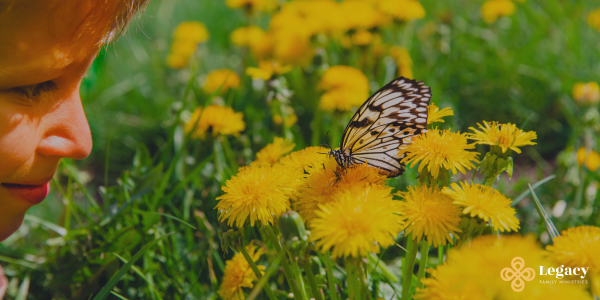
We see the importance of wonder, joy, and creativity in the Bible. Psalm 33:8 says, “Let all the earth fear the Lord; let all the inhabitants of the world stand in awe of him!” Christ tells us he speaks his message “so My joy will be in you and that your joy may be full” John 15:11. We are creations of God, created in his image, and designed to create. We see this in our work and hobbies- music, architecture, painting, and crafts. There are jobs where we restore relationships (counseling) and our health (nutritionists and doctors). We have an intrinsic desire to create, build, and restore. One study found that “awe” can increase oxytocin and calm our nervous system.1 Another article recently reported creativity’s benefits, including boosting brain function,2 reducing stress,3 and improving mental health4, self-esteem, and because of improved self-esteem, may also impact physical health5.
Wonder, Joy, and Creativity: When do they die?
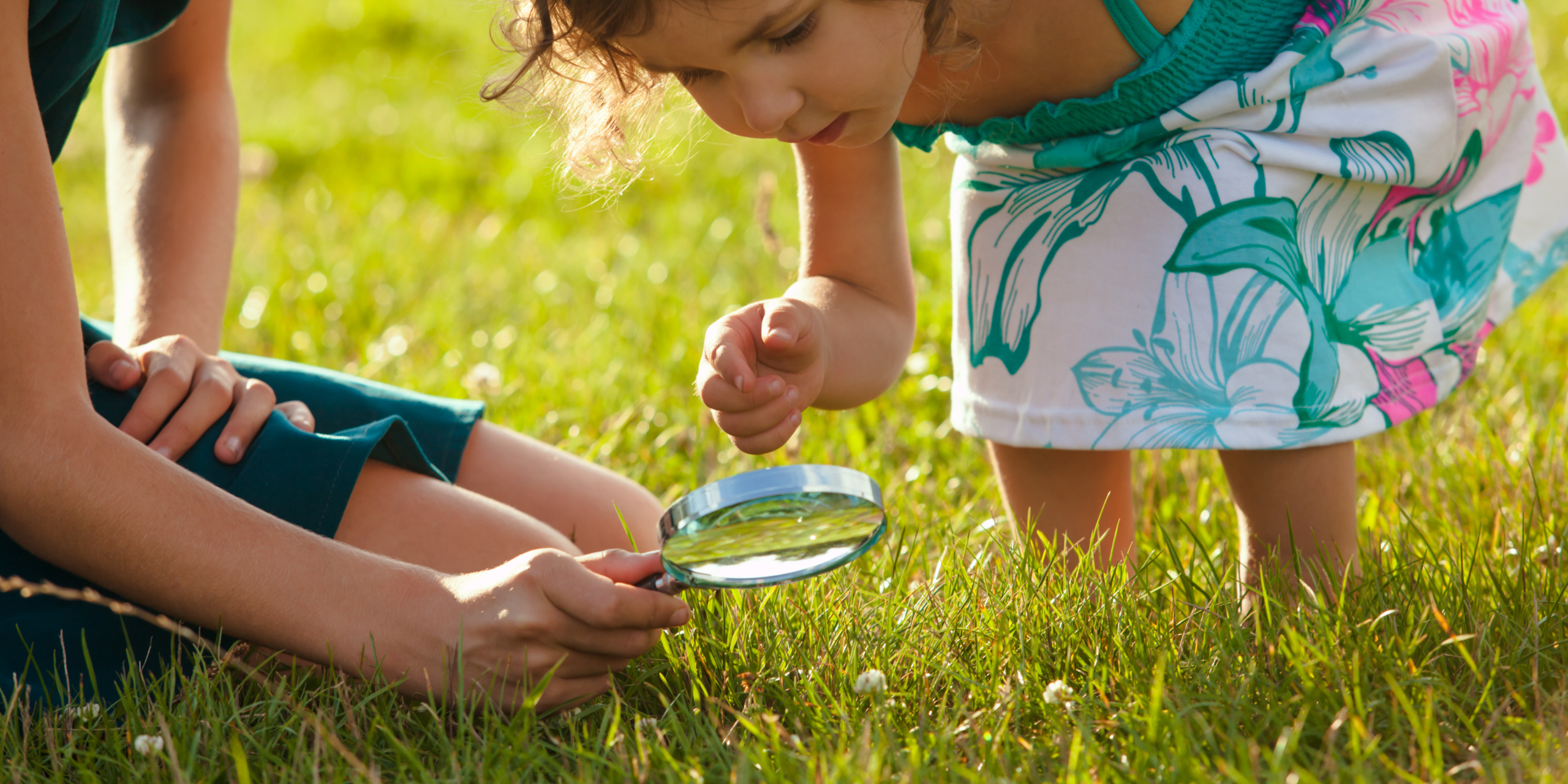
If you’ve ever talked to a child between the ages of 2-5, you might notice their amazement for the world around them. You might see the surprise on their face when they hear the story of Noah and the Ark or Jonah and the Whale. You can hear their excitement when they hear of Jesus healing the sick girl or raising Lazarus from the dead. Have the same conversation with a junior high student, high school teenager, or grown adult, and you might not find the same expressions of wonder, joy, and creativity.
When did it die? One study found that children as young as four years old begin to realize that people lie and start questioning the stories they hear.6 Another article reports that half of all children lose their wonder when they are six years old!7 Take some time to think through your own wonder, joy, and creativity. Do you need them in your life more? Would you like to see them again? Now, look at your children and ask the same questions. Are they losing these things? Spend some time in intentional reflection and ask the Holy Spirit to reveal ways that you may be responsible for stealing or killing the wonder, joy, and creativity in your children.

Six Ways to Bring Back Wonder, Joy, and Creativity to Our Children
With all things, be encouraging.
It’s easy to find faults and failures in how our children create. Instead, pick specific times you allow them to be creative without *fixing* anything. For example, my daughter’s spelling curriculum encourages one “free write” day where she writes, and I don’t correct any spelling, grammar, punctuation, etc.
Give your child a notebook.
Include a drawing pad or lined notebook for your children to write. Encourage them to find time every day to write, draw, color, and scribble in the notebook, and then encourage them to share it with you. (Refer to number 1 when they do share with you and don’t fix or change anything in what they create)
Worship.
Praise God with your children. Recognize the way God has worked in your lives and answered prayers. Turn on the music and praise Jesus together. Make it a family event, and find creative ways to make your own music.
Ask what they think.
Instead of giving your children the immediate answer to their questions, ask them what they think. If they are asking, “What’s this for? “What do you do with this?” “How do you use this?” etc. Respond with “What do you think?” or “How do you think that could be used?” This encourages our children to think and be creative, and you might find yourself surprised, amused, and impressed by some of their responses.
Get excited.
Your children will often follow your lead. If they are younger, it will be easier. They might watch from the sides (and maybe roll their eyes) if they are older, but they will remember! When you are reading a book, read with excitement and interest. When going for walks or drives, marvel at God’s creation! Point out interesting things you see, smell, hear, and feel. Invite your children to these experiences with you. When they initiate it, be excited to participate with you and thank them for including you.
Do things WITH them.
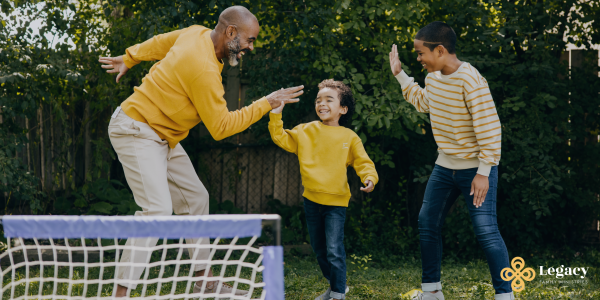
A 2023 study found that children are more imaginative when they play with others than by themselves.8 This included video games! So, if you have them- grab those controllers with your kiddos and play together.
Hold Fast to Them All
The world may take wonder, joy, and creativity from our lives in many ways. We are bombarded with unhealthy messages, lies, and deceit that would turn anyone cynical and jaded about life. As parents, we are busy and may unintentionally squash our children’s imagination, awe, and delight in the world around us. We have a responsibility to teach our children truth and reality while reminding them that the wonder, joy, and creativity they have are a God-given gift that the world cannot take away.
1 https://www.nytimes.com/2023/01/03/well/live/awe-wonder-dacher-keltner.html
2 Khalil, R., Godde, B., and Karim, A. (2019). The link between creativity, cognition, and creative drives and underlying neural mechanisms Front Neural Circuits 13(19) 10.3389/fncir.2019.00018
3 Martin, L., Oepen, R., Bauer, K., Nottensteiner, A., Mergheim, K., Gruber, H., & Koch, S. C. (2018). Creative Arts Interventions for Stress Management and Prevention-A Systematic Review. Behavioral sciences (Basel, Switzerland), 8(2), 28. https://doi.org/10.3390/bs8020028
4 Pavitra, K. S., Chandrashekar, C. R., & Choudhury, P. (2007). Creativity and mental health: A profile of writers and musicians. Indian journal of psychiatry, 49(1), 34–43. https://doi.org/10.4103/0019-5545.31516
5 Siwula, Molly, “Is Creativity Related to Physical Health? The Relationships Between Creativity, Flow, Self-Esteem, Physical Activity and Health-Related Quality of Life” (2011). Syracuse University Honors Program Capstone Projects. 295. https://surface.syr.edu/honors_capstone/295
6 Mills, C. and Keil, F. (2011). The development of cynicism. Psychol Sci 16(5): 385-390. doi: 10.1111/j.0956-7976.2005.01545.x
7 https://www.independent.co.uk/life-style/children-sense-of-wonder-age-six-b2402486.html
8 Bukhalenkova, D & Almazova, O. (2023). Active screen time and imagination in 5-6 years-old children. Front Psychology doi: 10.3389/fpsyg.2023.1197540