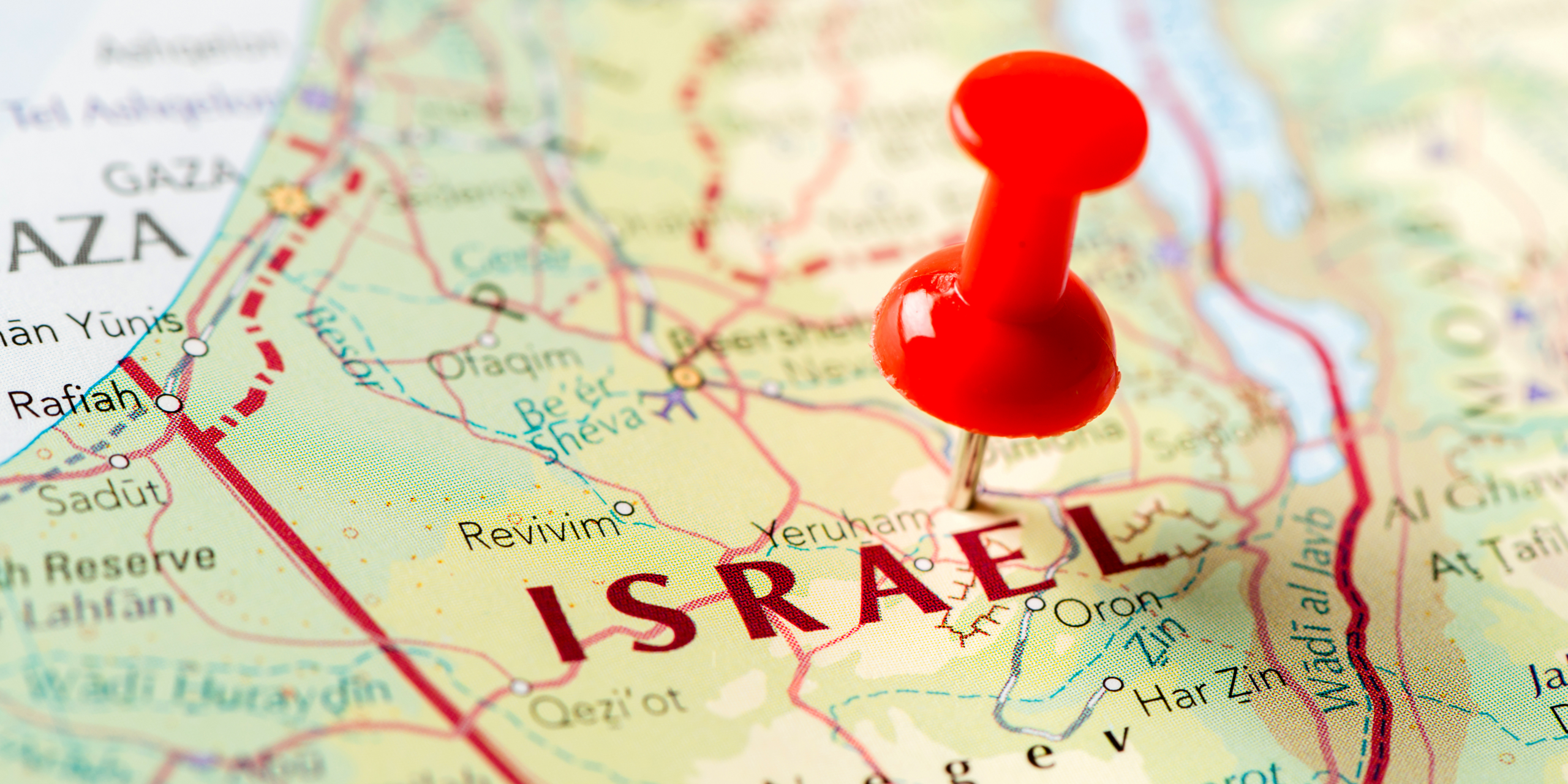
Joel and I sat down a couple of nights ago so he could update me on what was happening in Israel. I’ve shared before that with five young children in the home all day, I don’t sit down to read the news. I only heard about Israel when a friend texted me earlier in the week with a link that Hamas called for global Jihad on October 13th. I had seen Facebook posts with the Israeli flag and people showing solidarity, but I had not had the time to sit down and see what was happening. When Joel started to give a rundown of what had been happening this past week, my heart sank, and my stomach turned.
Across the world, there has been an unfolding of suffering and violence, of intentional hate towards the country of Israel and the Jewish people. Children are roaming the streets in tears, unable to comprehend the violence and death they witness. Unarmed men, women, children, and older adults are attacked and taken hostage. While happening on the other side of the world, what is unfolding is witnessed across the globe by families and children everywhere. These occurrences beg the question: How do christian parents respond in these times?
Society Responds to Israel, Hamas, and War
There are typical responses we hear when we begin to hear of war and violence in other areas: there is an uproar in the community.
- Society advocates for one side and pushes the government to get involved or stay out of it.
- Find someone to blame. Society wants to hold someone responsible. It is much easier to “fix a problem” when there is an easy target, someone to whom to point the finger.
- Critique the responses of the leaders in our country. If we don’t agree with someone, now is an ideal time to pick apart how they handle the situation, things they have said, and how they are using it to further their agenda. We identify what we don’t like, and we pick the people apart.
- Theological Debate- Frequently, in these situations, many give their theological perspective on God, suffering, and sin. While the intentions are to help, often they are nonbiblical.
Many of these actions are ways society attempts to handle their grief over the situation, and while this blog is to be more educational, how to respond to grief can be found in this blog here. These responses might help a person in the heat of the moment, but there are considerations to consider when responding as Christian parents.
Christian Parents Responding to Israel, Hamas, and War
Our children are listening.
Children hear every critique, comment, judgment, and accusation. Children always listen to their parents (especially when we don’t want them to!) We need to be intentional and careful with the words we choose, the tone we take, and how critical we are being. We need to ask if our comments and conversations show grace and truth.
What they hear, children repeat- worse, they take it to heart.
We’ve all been that parent (or we’ve known the parent) of the child who shared too much information in their Sunday School class. Kids will repeat you. So, if we say something we don’t want our children repeating, we need to rethink our words. Our words can have a graver impact when we consider that children take them to heart. When we look at the young children on the other side of the world ridiculing and insulting a child of another faith, we can quickly identify that the child was taught to think hateful towards other people. Thus, we need to ensure that we aren’t inadvertently teaching our children to hate when we make flippant comments or comments in anger.
The more our children hear these ideas, the more it impacts them.
Children will either harden their hearts against the same people and ideas they listen to us tear apart or what we say as parents may cause them to harden their hearts against us. The younger our children are, the more time we have to influence their ideas. They grow and believe the same things we believe. As they get older, they will begin to question our ideas. If they grow and determine we are hateful and judgmental, they will push back against us and, unfortunately, our beliefs. If we want our children to hold tight to Christ, we must show them a loving example with truth and grace.
Knowing the importance of how we are personally handling what we see happening is just one step. As Christian parents, we must decide how to move into the second step- intentionally talking to our children about the situation. Letting our children watch us handle it or overhear our conversations is not enough. We must engage and include them in it.
Five ways Christian parents can talk to their children about Israel, Hamas, and war
Remember that they already know more than we realize they know.
With the access that children have to the radio, news, social media, and television, they get information quickly. Information comes from other sources as well. Students overhear teachers at school and Sunday school and conversations in the store and with their friends. When you talk to them, find out what they might have heard about the situation.
Opportunities to pray
Prayer is a vital discipline to teach our children; times like these provide a chance to sit with them and pray together. Locate the area on a map, print it, and hang it up. Choose designated times throughout the day to pray together, and set an alarm or timer to remind you as a family to pray. Include children of all ages! If they can talk, they can pray! Allow your littlest children to repeat after you if they aren’t used to praying out loud.
Age-Appropriate Conversation
Talking to our children is essential, and part of that means keeping in mind the age and maturity of the child. Be confident in your children’s abilities to handle some of the information.
a.Keep the conversation simple for children who aren’t ready for much information. Talk about the different areas, how they disagree, and how people hurt one another. You don’t have to go into who is right vs wrong. Talk about how God calls us to treat one another when we disagree and how, because we live in a sinful world, we often don’t do this.
b.For those children who can handle more complex conversations, consider digging into scripture and history a little more. Talk about the violence and struggle over the years for this area and the significance this area holds for the different groups of people. Not sure how important history is for our children, check out this blog here.
4. Fear Not
This will be a vital part of any conversation right now for some children. Children who hear more details than they are ready for or see violent images might be fearful for their safety or the safety of others. They would benefit from intentional conversation and prayer in this area. Find a memory verse for these children to focus on (Philippians 4:8 is one of my favorites). Focusing on God’s truth can be instrumental in overcoming fear. Legacy has several resources on this topic, including blogs: How to Parent without Fear, Living a Fearless Life, and Halloween, Fears, and Christian Parenting. Check out any of these and others by searching “fear” on our “resources” page.
5. God, Suffering, Sin, and Evil
I was an undergrad student when I had my first conversation on this topic. The course was called “God, Suffering, and Evil,” and the class challenged me in every way. If you have older children, start having conversations now on this topic. Questions will arise, and they will find answers elsewhere if we don’t tell them the truth. These answers will often deceive them and take them down non-biblical pathways. Read with your children and research with them. An excellent resource for parents wanting to grow in this area is: “Why Does God Allow Evil” by Clay Jones.
a. Worldview Discussion- Much of what we see happening in the world is a direct result of what people believe about the world. What we believe about God, the world, and humanity, directly impacts how we live in the world and with one another. Talk with your children and answer together major worldview questions. Worldview questions include questions about the following:
-origin (where did everything come from?)
-Meaning (What is the meaning of life? What’s worth my time and passion?)
-Morality (Who sets rules about right and wrong and is that relative or absolute)
-Identity (What makes a person? How are we different than animals?)
–Destiny (What happens when we die? Where is history headed?)
For an extra challenge for older teens and young adults, consider comparing Biblical Worldviews with Worldviews around the world, including other monotheistic worldviews such as Islam and Judaism. Legacy offers a plethora of resources to help understand worldview and the impact it has, including a free download “Master the Basics-Christian Worldview”
Final Thoughts on Israel, Hamas, and War
The conflict and violence in Israel and the Gaza Strip will not end anytime soon. This is why it’s imperative for Christian parents to talk to their children about it. As parents, we saw it while we were growing up, yet it wasn’t as quick to access with the lack of technology. If you were like me, you might not have understood the area’s significance. While we watch the pain occurring and have access to more information than ever before, we must continue to be intentional. We must teach our children, and we must pray with them.