As parents, we have heard it before (probably multiple times), “That isn’t fair!” Whether your child is five or 15, they have probably had this mentality. We see this belief in our culture as people continually “expect” to receive whatever they want, whatever they deem fair, whatever they think they have a “right” to. We see this as people parade around complaining someone infringed on their “rights” or that some law is taking away their “rights”.
If we are honest, there is probably a good chance we have had this mentality as adults. How do we address this with our children? We could absolutely reply, “life isn’t fair”. That’s probably our first reaction most of the time and, technically it’s true. It’s necessary that while our children are young, we break it down so they grow into adults who reasonably understand the concepts, who understand that “wanting” something does not equal having a “right” to it and that when we have a “right” to something, there is also a “responsibility” that comes with it.
To have these conversations, we need to understand from where this mentality stems. Parents need to understand what a “right” is and how our society has been impacted by the misrepresentation of the concept.
Misunderstanding “Rights” has Led to Polarization
In the unlikely event that you have not noticed, our society is polarized. Whether along racial, gender, sexual, political, or any other differentiation, our country is possibly more divided than ever. Worse yet, many no longer care to get along with people they disagree with; we want to see the worst in each other. Not that long ago, we could disagree while being charitable enough to one another to assume good intentions for the difference of opinion. Now, if someone disagrees with us, we presume nefarious reasons; the dissenter holds their view because they do not care, or worse, they wish for harm.
One reason for this polarization is a misunderstanding of rights: what constitutes a right, how correctly to use rights, and from where rights come. The issue of rights provokes a passionate response from us because we desire freedom; we want to know that we have certain immutable entitlements. When someone tries to take away those endowments, we become combative. However, our aggression is misplaced when we believe something is a “right” when it is not. Similarly, we are wrong when we withhold a “right” from someone. Let us start at the beginning. Whether we are talking about civil rights, gender rights, abortion rights, marriage rights, the right to children, and so on, we must be certain our definition of rights is on a sure footing.
What is a Right & Where Do They Come From?
Before we can employ rights correctly, we must understand what a “right” is. In the biblical sense, a “right” is the ability or authority to act without consequence, and such authority cannot be reasonably denied.[1] Civil liberties are correctly considered rights. Civil rights are such because we are all made in God’s image and therefore have inherent dignity and are worthy of respect. Denying someone a fundamental liberty, e.g., to eat at a restaurant, violates their rights. Moreover, it is also essential to understand that both positive and negative rights exist. A positive right is a right that allows for something, e.g., the right to life. A negative right prevents something, e.g., harm, theft, or hindrance of rights. If someone has a right to property, they have the right not to have their property unjustly seized.
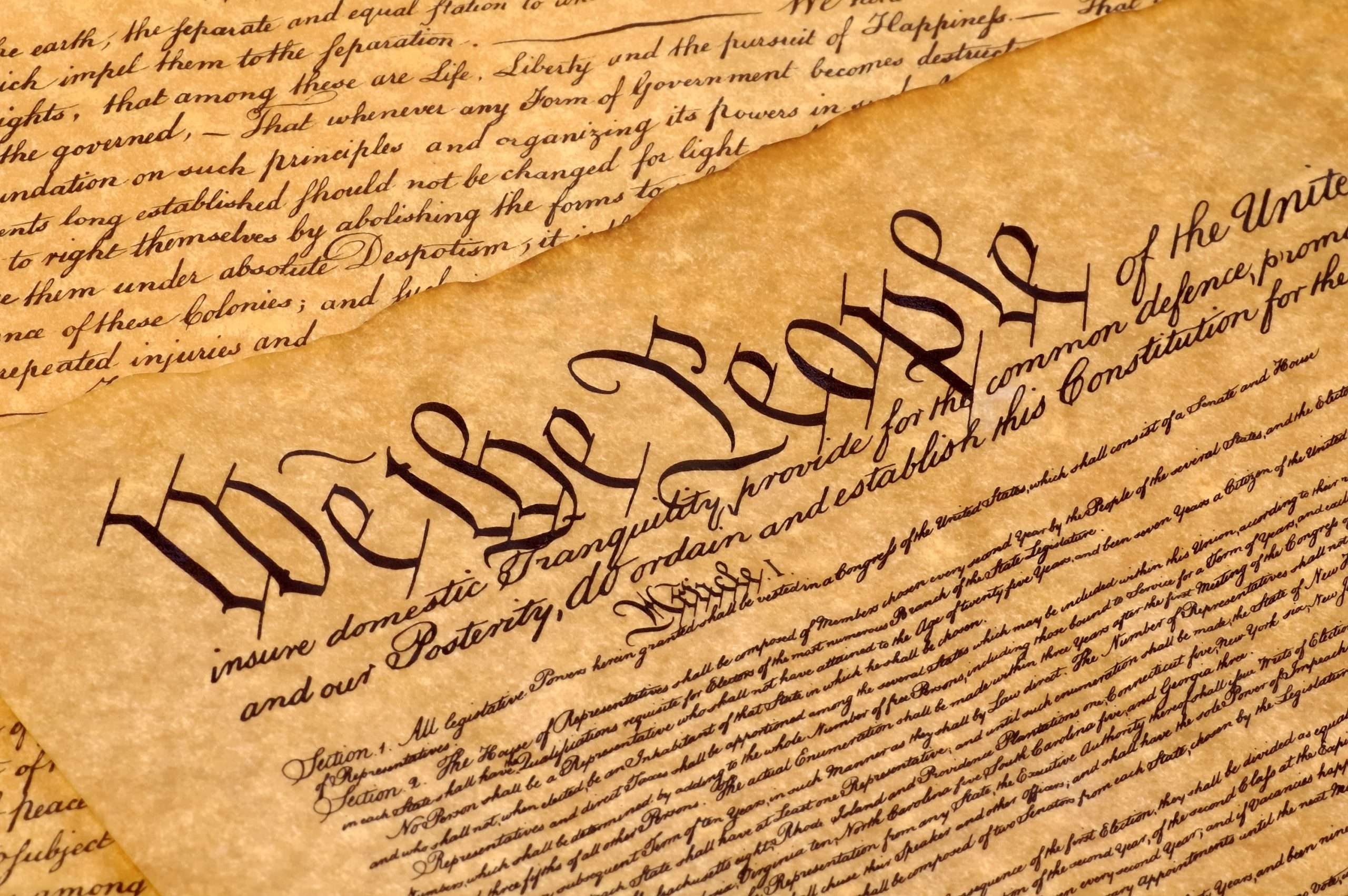
The founders of the United States understood the importance of rights and where they came from, as they were careful to point out that we have certain[2] God-given, and therefore, inalienable rights. This highlights a second common mistake; often people say that they have “constitutional rights”. However, the second paragraph of the Declaration of Independence clearly states that rights come from God, which cannot be denied. Further, the Declaration states that it is the government’s job to secure rights.
Some do not accept the Bible’s authority or do not believe in God. That is certainly an option; however, the one who makes the claim that “rights” do not come from God, bears the burden of explaining from where they come. If “rights” do not come from God, the only sensible option is they come from man,[3] e.g., governments. A non-Biblical definition of “right” in this context includes “morally good, justified, or acceptable.” The one who makes this claim not only must explain who gives “rights” but also must explain how something can be a “right” and what meets the criteria. Rights given by man can be taken away by man, meaning it is not a right after all. Therefore, unless rights come from God, they do not exist.

Understanding “Rights” and “Desires”
Immediately, the Biblical definition of rights presents problems for many alleged “rights”; if a right comes from a wholly pure, loving, and sinless God, there are limits to what constitutes a right. There are many examples today of “desires” that people have claimed are rights and unfortunately, their arguments have convinced Christians and non-Christians alike that they are rights.
Abortion
Currently, one of the most frequently cited “rights” is the right to abortion. Of course, abortion is often masked as “women’s healthcare” because that sounds more aggregable than killing a preborn child. The 6th commandment forbids murder, but God had already forbidden this in Genesis 1:27, which says that He created man in our (meaning God’s) image. If we are made in God’s image, and life begins at conception,[4] it follows that we should not murder each other, regardless of whether we have exited the womb or not. Further, the right to do what one pleases with their body has limitations because we are made in God’s image. Additionally, the “my body, my choice” argument has no bearing; bodily autonomy does not trump God’s command not to murder, nor does it trump the baby’s right to life. One does not need to be a Christian or invoke the Bible to argue against abortion. The beginning of someone’s life is not determined by their religious affiliation. We all know that life begins at conception and agree that murder is wrong. One may desire an abortion; however, there is no “right” to an abortion.
Same Sex Adoption
Another example is the alleged right for same-sex couples to have children. Immediately this claim is problematic because same-sex couples willingly entered what they knew was a sterile relationship. Same-sex couples cannot produce children yet claim a right to children. Not only does their claim ignore the consequence of their choice, but there is also no “right” to children, whether homosexual or heterosexual. Psalm 127:3 says, “Children are a heritage from the Lord, offspring a reward from him.” God does not guarantee us children; we are blessed when given them; the heartbreaking inability for some to bear children is a result of the fall. Likewise, as the book of Genesis tells us and basic biology affirms, conception requires both a man and a woman. We cannot violate God’s law and engage in behavior that eliminates a particular outcome, then demand that which was never promised to begin with. Many of us desire children; no one has a right to children.
Transgenderism
One more example is the “right” to do what one wants with their body as it pertains to transgender ideology. In this instance, the claim is the right to live one’s truth. However, our bodies are God’s temples, indwelt by the Holy Spirit (1 Cor. 3:16-17). We are told to honor God with our bodies (1 Cor. 6:20) and to use our bodies for spiritual worship by offering them as a living sacrifice to God (Rom12:1). These passages make clear that there is a right and a wrong way to use our bodies. Mutilating our healthy bodies to deny God’s created order is not a right. Likewise, demanding others deny God’s created order by affirming a false reality is not a right. For the nonbeliever, there is no right which allows someone to force others to participate in a lie simply because the other party prefers the lie rather than the truth.
Responsibilities Always Accompany Rights
What is often forgotten in our me-centered society is that rights are always accompanied by responsibilities, namely the responsibility to use our rights morally. Our right to own property does not convey a right to do whatever we want on our property or to seize the property of others unlawfully. The right to pursue happiness is neither a guarantee of happiness nor the authority to pursue happiness at the expense of others. We all have a right to liberty; however, we do not have the liberty to do whatever we want. Our freedom can be taken away in the event we break the law. We have rights, but we are not entitled to use those rights however we want—rights without restraint result in chaos.
One of the reasons we know that God is loving is because he sets boundaries. God knows what giving us sinful humans unfettered freedom would lead to; we would bring on our destruction. As parents, we set boundaries and restraints for our children because we love them. God, the perfect father, does the same for us. It does not take in-depth analysis to see results of our choices to go beyond God’s boundaries in our society: the sexual brokenness, the skyrocketing rates of depression, suicide, and substance abuse; the genocide of over 60 million preborn babies, and the scars those abortions leave on the mothers, the historic levels of crime, the ever-increasing rates of fatherless homes. Freedom without limitation is not love; it is antipathy.

Legislating Morality
When discussing rights and restraints, some will say that we should not legislate morality and that no one should force their morals on others. This objection ignores that every law legislates morality because every law allows for or prevents a specific behavior and provides for or prevents the opposite behavior. Just as rights allow specific behavior and prohibit others, a law restricts a particular behavior and allows the opposite. For example, criminalizing theft denies the freedom to take what belongs to others while allowing for a right to own property. Criminalizing assault negates the freedom to commit violence on others for no reason while allowing for the right to live without being assaulted.
It is impossible to make laws without legislating morality; the only question is whose morality is legislated. We have already discussed the depravity that follows ignoring God’s restrictions. Our arrogance and self-worship prevent us from acknowledging that legislating our own morality is a fool’s errand. We have many people complaining that our judicial branch (mainly the Supreme Court) is broken or that the legislative branch is broken. This stems from a lack of understanding of how our government was designed to work, and because we have abandoned the biblical foundation on which our country was founded. As John Adams once wrote,
“because we have no government armed with power capable of contending with human passions unbridled by morality and religion. Avarice, ambition, revenge, or gallantry, would break the strongest cords of our Constitution as a whale goes through a net. Our Constitution was made only for a moral and religious people. It is wholly inadequate to the government of any other [sic].”[5]
What Is Our Parental Responsibility?
As parents, we have a responsibility to our children to explain the difference between the rights God has given us and what our world tries to convince us. Younger children need to be taught early that wanting something does not mean they get it or that people should cater to their desires. Older children need to be challenged. Take what you see in society and have conversations with your children about it. Talk about what “rights” are and where they come from. Follow the train of thought with them to help them learn to identify faulty thinking. Take the examples you see in the news or hear about in schools and work through it with your child to determine whether it’s a logical claim.
By Joel Sinclair
MA Christian Apologetics, Biola University
[1] Kevin A Lewis: Theology of Civil Government, page 6.
[2] This is an important word, certain. It means not everything we want is an inalienable right.
[3] Some, mainly those who hold a naturalistic worldview claim that rights and morality have come from evolution, but this is an unsustainable claim. Nature does not have the ability to create metaphysical concepts such as rights and morality.
[4] Though denied for a long time, this point is widely accepted today by Christians and non-Christians alike. See the following study: https://papers.ssrn.com/sol3/papers.cfm?abstract_id=3211703. That life begins at conception has become so undeniable that this point is no longer disputed, hence why those in favor of abortion now argue personhood rather than when life begins.
[5] John Adams, in a letter to the Officers of the First Brigade the Third Division of the Militia of Massachusetts, 11 October, 1798, italics mine.